Your Human Design Home
Explore your Human Design. Know where every path leads.
Begin with your bodygraph, then move directly into the chart layer, learning guide, relationship pattern, or daily transit you want to understand. Every experience uses the same connected Cosmic Profile.
See what you can explore
Choose the part of your design you want to open.
These are real examples from the Cosmic Oceans Human Design experience. Select any picture to go straight to that area.
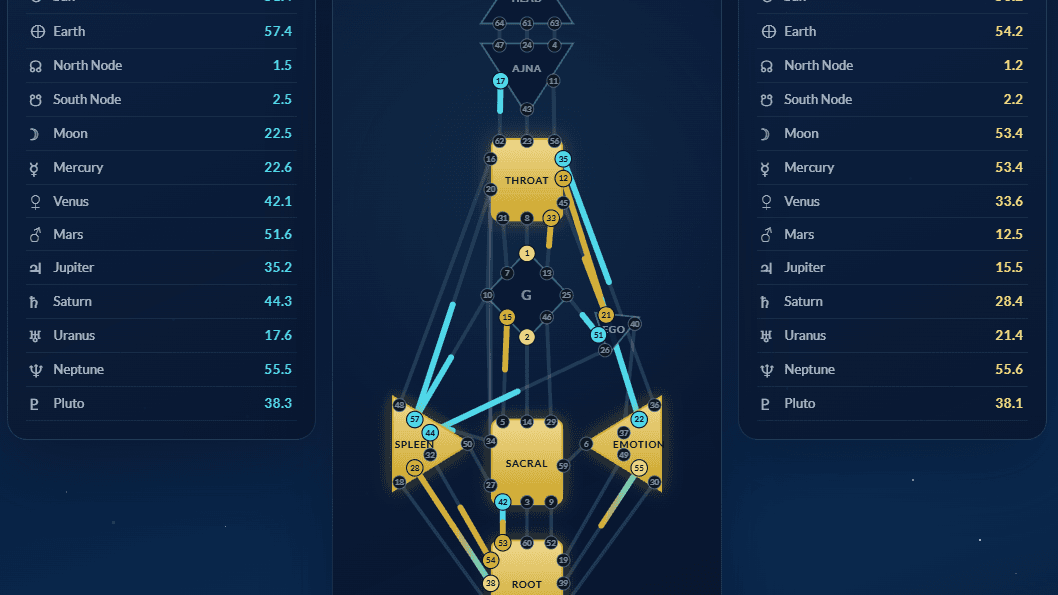
Your Bodygraph & Activations
See your nine centers, defined channels, Gates, and conscious and unconscious planetary activations.
Open the Bodygraph →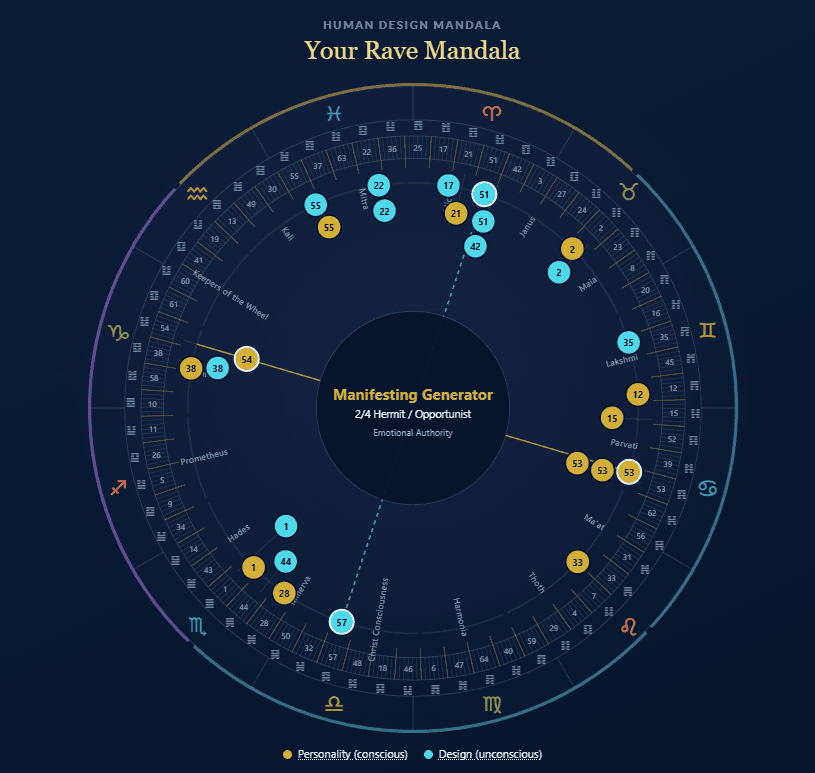
Your Rave Mandala
Follow every activation around the 64-Gate wheel and see how the zodiac and Human Design map together.
Open the Rave Mandala →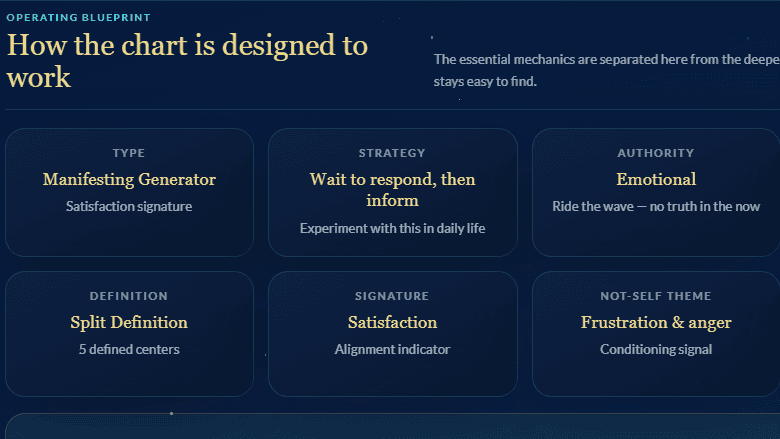
Your Operating Blueprint
Bring Type, Strategy, Authority, Profile, Definition, and Incarnation Cross into one clear overview.
Open the Blueprint →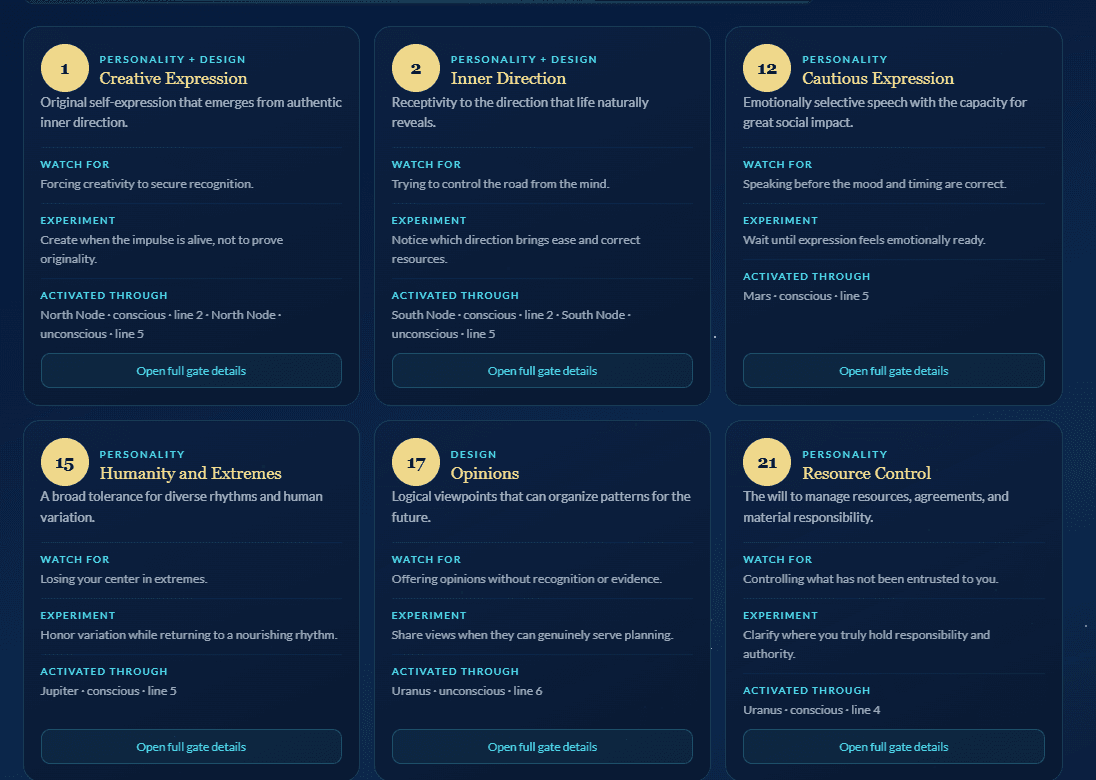
Your Active Gates
Explore each activated Gate, its line, its practical experiment, and the planetary placement carrying it.
Explore Active Gates →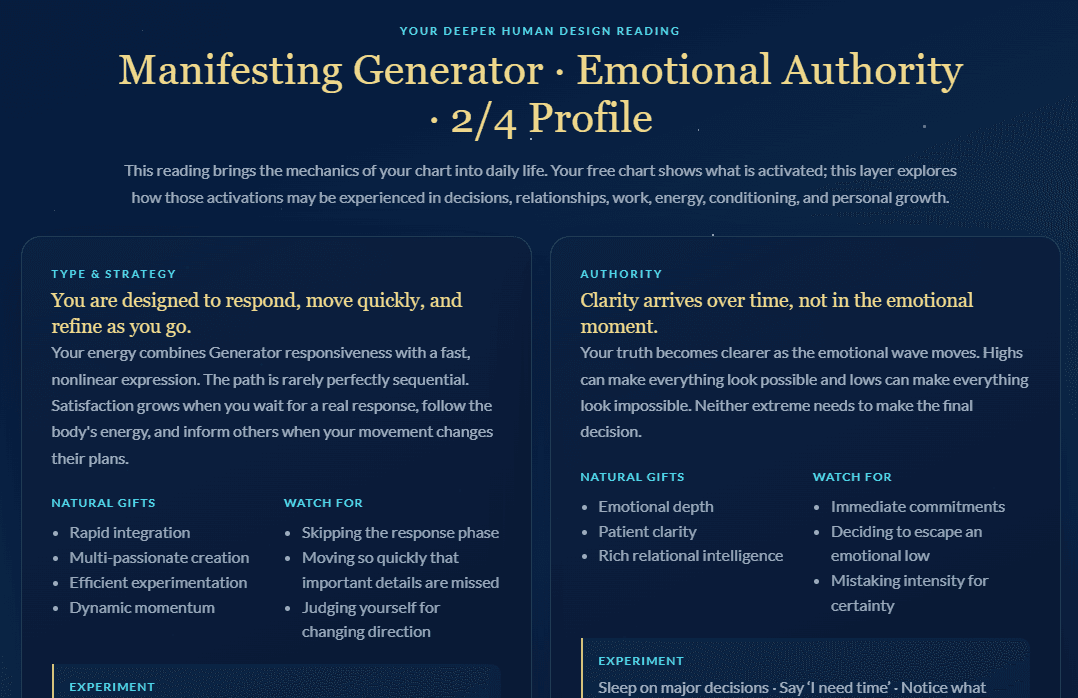
Your Deeper Human Design Reading
Translate the mechanics into decisions, relationships, work, conditioning patterns, and experiments for daily life.
See the Deeper Reading →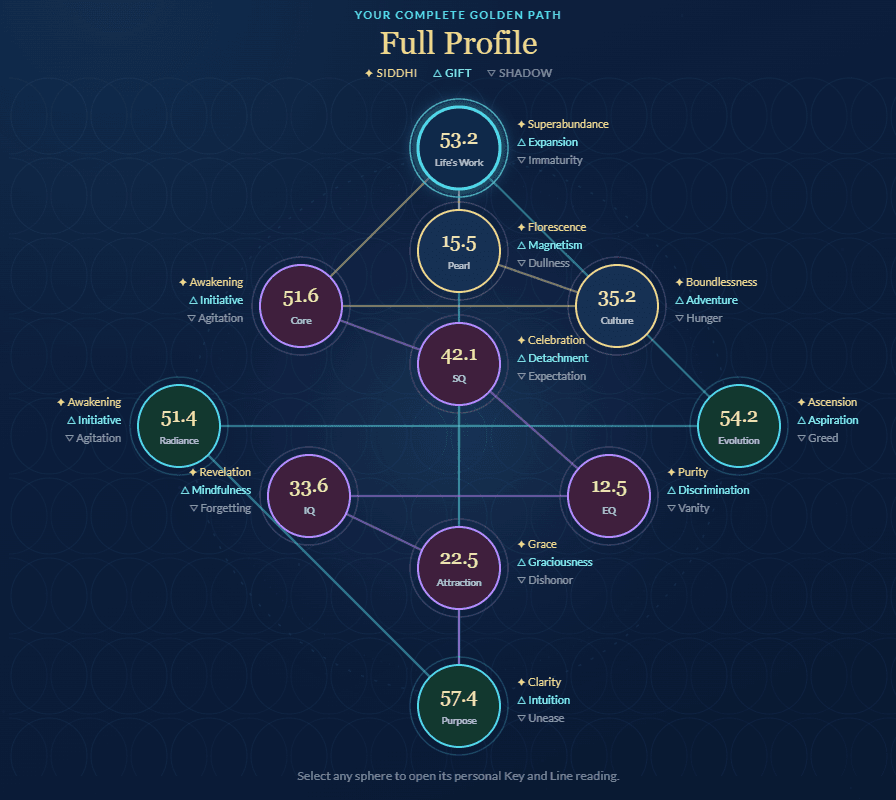
Your Golden Path
Carry your Human Design activations into the Activation, Venus, and Pearl Sequences of your Gene Keys profile.
Open the Golden Path →
Human Design Compatibility
Compare two bodygraphs and understand electromagnetic, companionship, dominance, and compromise Channels.
Explore Compatibility →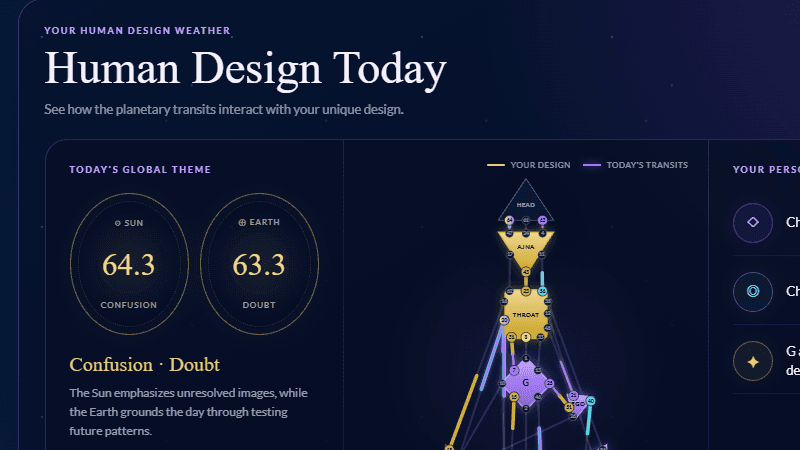
Human Design Today
See the collective Sun and Earth Gates, then add your chart to reveal personal transit activations and temporary definitions.
Open Today’s Transits →Already know what you want?
Open the exact layer inside your chart.
If you have not calculated your bodygraph yet, your chosen layer will stay selected while you enter your birth information.
A clear place to begin
Start with the mechanics. Let the details follow.
Your Type describes the broad way your energy meets life. Strategy gives that Type a practical way to engage, and Authority describes the inner process your chart treats as most reliable for decisions.
Profile, Centers, Channels, Gates, and planetary activations then show how those foundations become specific to you. You do not need to learn every term at once—the chart links let you return to one layer at a time.
Frequently asked questions
Human Design questions, answered.
What is Human Design?
Human Design is a modern self-reflection system that maps planetary positions to 64 Gates, nine centers, Channels, Type, Strategy, Authority, and Profile. Cosmic Oceans calculates those mechanics from your birth date, exact local time, birthplace, and historical timezone.
Where should I begin with my Human Design?
Begin with your bodygraph, then learn your Type, Strategy, and Authority before moving into Profile, Centers, Channels, Gates, and planetary activations. The overview links on this page let you return to each layer directly.
Is the Human Design chart free?
Yes. The bodygraph and its core mechanics are included. Premier adds the deeper personalized interpretation, relationship analysis, and personal daily transit overlay.
Does Human Design Today change my natal design?
No. Your natal chart remains fixed to your birth information. Daily planetary activations are temporary influences that can connect with your existing Gates and Centers for a particular moment.